
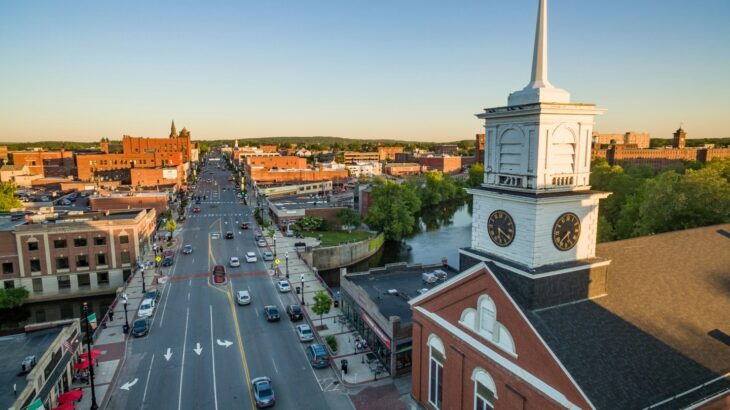
Municipalities — you do it all. You’re the backbone to our lively New Hampshire communities, managing our schools, libraries, town offices and more. Between aging infrastructure and budget pressures, you’re tasked with competing responsibilities that are equally important in maintaining safe and comfortable public spaces.
The NHSaves® utility partners can be your trusted collaborator to help identify practical energy-saving projects that can improve building performance and support long-term growth for your community.
Planning for Long-Term Efficiency and Comfort
Energy upgrades can do so much more than boost a building’s overall energy efficiency. Increased comfort and reduced maintenance are wins that people feel. Pair that with extending the reliability of public buildings and systems, and you have a winning duo that benefits the community in the moment and in the future.
Many public offices and community spaces in New Hampshire are housed in older, historical buildings. This can often mean outdated lighting systems, HVAC equipment that might be working harder than needed or drafty indoor conditions that could be silently driving up heating and cooling costs.
Making improvements to these systems requires strategic planning that effectively utilizes public dollars and makes the most positive impact for residents and community members. By improving building performance now while keeping long-term resilience and savings in sight, energy planning can be part of your strategic solution.
Small Changes for Big Savings
Sometimes the best way to start is with small steps forward. Here are some simple tweaks you can make to your building that will create an immediate positive impact in your community:
- Upgrade to efficient lighting and controls: Lighting projects can reduce energy use, cut maintenance needs and improve visibility and safety in public spaces like schools and parking areas.
- Improve the building envelope: Air sealing and insulation can help address uneven temperatures and unnecessary heating or cooling losses in older buildings.
- Modernize building controls: Updating thermostats or scheduling systems can help communities better manage energy usage in buildings with variable occupancy patterns like libraries and recreational spaces.
- Plan HVAC updates strategically: Modern HVAC solutions can support comfort and operational reliability while helping communities prepare for seasonal demands.
- Start with one high-impact building or system: Beginning with a visible, high-use facility can help build momentum and inform future updates.
Municipal Savings in Action
Need some inspiration for your next project? Join the host of towns and municipal buildings across the state that are improving energy efficient operations and lowering costs.
- Seabrook converted their streetlights and town building lighting systems to LEDs, demonstrating how municipalities can start small and still achieve positive impact. This upgrade is lowering Seabrook’s annual energy consumption by over 550,000 kilowatt hours.
- The Laconia Housing Authority’s Summer Street Housing Complex completed a series of energy-efficiency upgrades to improve resident comfort and overall building performance. The Authority received a $53,500 incentive for these upgrades as part of their participation in Home Energy Assistance — turning this project from a dream to reality.
- By incorporating energy upgrades into building projects from the get-go, the Oyster River Middle School showcases how impactful planning for energy efficiency can be. Their goal of zero net energy operation is getting closer and closer, with over 300 tons of CO2 being saved every year due to their strategic energy planning.
- Broad energy initiatives in the small businesses of our downtown areas play an important role in whole-community growth. The Main Streets program is a no-cost way to get any business started on their energy efficiency journey.
How the Utility Partners Can Help
The NHSaves utility partners can assist municipalities with many aspects of planning an energy efficiency project such as identifying efficiency opportunities, accessing incentives for qualifying measures and offering guidance on program pathways and implementation.
Whether your town starts with lighting, controls or a larger building upgrade, the right energy project can create lasting value for the people and spaces your community depends on every day.